Showing posts with label Double. Show all posts

Sunday, 19 July 2026

July 6th - Octave Day of SS Peter & Paul


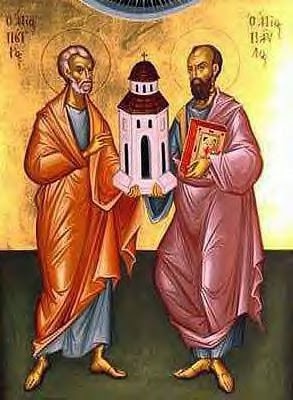
Ancient icon of sts peter & paul


The Octave Day of SS Peter and Paul is of double rite and its liturgical colour is red. The seventh Sunday after Pentecost is commemorated at Vespers, Mattins, Lauds and Mass.

At Vespers yesterday afternoon the antiphons Hoc est praeceptum meum etc, from the Common of Apostles, were sung, doubled, with Pss 109, 110, 111, 112 & 116. The Office hymn was Exsultet caelum laudibus. The versicle and its response, the antiphon on the Magnificat and collect were proper to the Octave Day. After the collect of the Octave Day a commemoration was sung of the Sunday. The Suffrages were omitted as were the Dominical preces at Compline.

At Mattins the invitatory is Regem Apostolorum Dominum, Venite adoremus and the Office hymn is Aeterna Christi munera. In the first nocturn the antiphons In omnem terram etc are sung, doubled, with Pss. 18, 33 & 44. The lessons are from the Sunday and are the the lessons are a continuation of the Second Book of the Kings. The lessons are the same as in modern editions of the Breviary. The responsories in all three nocturns are from the Common of Apostles. In the second nocturn the antiphons Principes populorum etc are sung, doubled, with Pss. 46, 60 and 63 and the lessons are from a sermon of St. Chrysostom. These are the same as those found in the later editions. In the third nocturn the antiphons Exaltabuntur etc are sung, doubled, with Pss. 74, 96 & 98. The homily is from St. Jerome on St. Matthew's Gospel. Again these are the same as those found in the post-Clementine editions. Today the eighth and ninth lessons are read together to form an extended eighth lesson and the ninth lesson is formed from the three lessons given for the homily of the seventh Sunday after Pentecost. These are from St. Hiliary on St. Matthew's Gospel. These lessons are the same as in the post-Clementine editions. The Te Deum is sung.

At Lauds the antiphons Hoc est praeceptum meum etc are sung, doubled, with Pss. 92, 99, 62-66, Benedicite, 148-149-150. The Office hymn is Exsultet caelum laudibus. After the collect of the feast a commemoration of the Sunday is sung. The Suffrages are omitted.

At Prime and the Hours the antiphons from Lauds are sung in the usual order. At Prime, Pss. 53, 188(i) & 118(ii), the lectio brevis is Ibant Apostoli etc.

Mass is sung after Terce. The Gloria is sung, the second collect is of the Sunday, the Creed is sung, the preface is of the Apostles and the last Gospel is of the Sunday.

At second Vespers the antiphons Juravit Dominus etc, from the Common are sung, doubled, with psalms 109, 112, 115, 125 and 138. The Office hymn is Aeterna Christ munera. After the collect of the Octave Day a commemoration of the Sunday is sung. The Suffrages are omitted as are the Dominical preces at Compline.

Icon: Wikipedia, Public domain, via Wikimedia Commons

Sunday, 12 July 2026

June 29th - SS Peter & Paul Apostles


The feast of the Apostles SS Peter and Paul is a double feast with an Octave. The liturgical colour of the feast, and Octave, is red. The sixth Sunday after Pentecost is commemorated in the Office and at Mass.

At Vespers yesterday afternoon the antiphons Petrus et Joannes etc were sung, doubled, with Pss. 109, 110, 111, 112 and 116. The Office hymn was Aurea luce. After the collect of the feast a commemoration was sung of the Sunday. The Suffrages were omitted as were the Dominical preces at Compline.

At Mattins the invitatory is Regem Apostolorum Dominum, Venite adoremus and the Office hymn is Aeterna Christe munera. In the first nocturn the antiphons In omnem terram etc are sung, doubled, with Pss. 18, 33 and 44. The lessons are taken from the Acts of the Apostles. These are identical to those found in the post-Clementine editions. In the second nocturn the antiphons Principes populorum etc are sung, doubled, with Pss. 46, 60 & 63 and the lessons are from a sermon of St. Leo. These lessons are considerably longer than those found in the later editions. In the third nocturn the antiphons Exaltabuntur etc are sung, again doubled, with Pss. 74, 96 & 98. The homily is from St. Jerome on St. Matthew's Gospel. Again the text of these lessons is considerably longer than that found in the later books and the text of the ninth lesson is entirely absent from them. Today the eighth and ninth lessons of the feast are read together to form the eighth lesson of the day and the ninth lesson is formed of the three lessons appointed for the third nocturn of the Sunday. The lessons for the Sunday are from a homily from St. Ambrose on St. Mark's Gospel. The seventh lesson (of the Sunday) includes the first sentence (Consequens igitur... a jejunio liberaret) from the modern eighth lesson. In the Tridentine Breviary the eighth lesson thus begins Itaque nemo and continues with most of the modern ninth lesson until ...sed nec adhuc quidem potestis. The ninth lesson begins In modum lactis but most of its text is not found in the modern books. The Te Deum is sung.

At Lauds the antiphons Petrus et Joannes etc are sung, doubled, with Pss. 92, 99, 62-66, Benedicite, 148-149-150. The Office hymn is Jam bone pastor Petre. After the collect of the feast a commemoration of the Sunday is sung. The Suffrages are omitted.

At Prime, Pss. 53, 118(i) & 118(ii), and the Hours the antiphons of the feast are sung in the usual order. At Prime the lectio brevis is proper to the feast, Et Petrus etc.

Mass is sung after Terce. The Gloria is sung, the second collect is of the Sunday, the Creed is sung, the preface is of the Apostles and the last Gospel is of the Sunday.

At second Vespers the antiphons Juravit Dominus etc, from the Common, are sung with Pss. 109, 112, 115, 125 and 138. The Office hymn is Aurea luce. After the collect of the feast a commemoration of the Sunday is sung. The Suffrages are omitted as are the Dominical preces at Compline.

Sunday, 7 June 2026

May 25th - The Most Holy Trinity

The Feast of the Most Holy Trinity is a double feast and its liturgical colour is white. Today is also the first Sunday after Pentecost.

At first Vespers yesterday afternoon the antiphons Gloria tibi Trinitas etc were sung, doubled, with Pss. 109, 110, 111, 112 and 116. The chapter, O altitudo, and hymn, O lux beata Trinitas, will be used at Vespers on Saturdays for all the Sundays after Pentecost when the following Office if of the Sunday. The antiphon on the Magnificat, Gratias tibi, Deus etc, and the collect, Omnipotens, were proper to the feast. After the collect of the feast a commemoration was sung of the first Sunday after Pentecost. After Vespers the antiphon Salve Regina was sung for the first time this year.

At Mattins the invitatory is proper, Deum verum, unum in Trinitate, et Trinitatm in Unitate, Venite adoremus. The Office hymn is Summae Deus clementiae. In the first nocturn the antiphons Adesto unus Deus etc are sung, doubled, with psalms 8, 18 & 23. The lessons are taken from the sixth chapter of the Prophet Isaiah. These are identical to those found in the 'modern' books. In the second nocturn the antiphons Te invocamus etc are sung, doubled, with psalms 46, 47 & 51. The lessons are taken from the Book of Bishop Fulgentius on faith. The fourth lesson continues with Si enim, sicut et Patris...veraciter Trinitas diceretur. The fifth lesson begins Rursus quidem Trinitas...and continues Per hanc unitatem...totus quoque Spiritus Sanctus in Patre et Filio. The sixth lesson begins Nullus horum and continues past the ending found in the 'modern' editions with three more sentences Sicut ergo...est trium personarum divinitas. In the third nocturn the antiphons Caritas Pater est etc are sung, doubled, with psalms 95, 96 & 97. The lessons are from a homily of St. Gregory Nazianzen. These are again slightly longer than those found in the 'modern' editions. The seventh lesson continues Nec extensionem...atque potentiae credimus. The eighth lesson begins Et ideo unum... and continues Sic est Apostolus...per quem omnia et nos per ipsum. The ninth lesson is of the first Sunday after Pentecost, it ends slightly before the version in 'modern' editions with Ego sum panis vivus, qui de caelo descendi? The Te Deum is sung.

At Lauds the antiphons Gloria tibi Trinitas are sung with Pss. 92, 99, 62-66, Benedicite & 148-149-150. The Office hymn is Tu, Trinitatis Unitas. After the collect of the feast commemorations are sung of the first Sunday after Pentecost and of St. Urban.

At Prime, Pss. 53, 118(i) & 118(ii), Quicumque is sung but the Dominical preces are omitted.

Mass is sung after Terce. Before Mass at the sprinkling of lustral water the antiphon Asperges me returns. The Mass is proper, Benedicta sit. The Gloria is sung, the second collect is of the Sunday, the third collect is of St. Urban. The Creed and the common preface are sung and the last Gospel is of the Sunday.

At second Vespers the antiphons Gloria tibi Trinitas etc are sung with Pss. 109, 110, 111, 112 & 113. The chapter is O altitudo and the Office hymn O lux beata Trinitas. After the collect of the feast commemorations are sung of the first Sunday after Pentecost and of St. Eleutherius. At Compline the Dominical preces are omitted.

Sunday, 31 May 2026

May 18th - Dominica in Pentecostes - Pentecost Sunday


The feast of Pentecost is a double feast with an Octave preceded by a Vigil similar to that of Pascha but although the Vigil is celebrated after None, and has six prophecies, followed by the blessing of the font, Litany and Mass of the Vigil the service of Vespers is not integrated into the morning ceremonies. The liturgical colour of the feast and its Octave is red.

At Vespers yesterday afternoon the antiphons Dum complerentur dies Pentecostes etc were sung, doubled, with psalms 109, 110, 111, 112 & 116. The chapter was Dum complerentur dies Pentecostes etc and the Office hymn was Veni, Creator Spiritus. All hymns of Iambic metre have the Doxology Gloria Patri Domino, Natoque, qui a mortuis, Surrexit ac Paraclito, In saeculorum saecula during the Octave. There are no commemorations. The Suffrages are omitted during the Octave as are the Dominical preces.

Mattins for the feast, and Octave, is like Pascha in only having a single nocturn of three psalms and three lessons. The invitatory is Alleluia, Spiritus Domini replevit orbem terrarum, Venite adoremus Alleluia. The Office hymn is Jam Christus aster ascenderat. The antiphons Factus est etc are sung, doubled, with Pss. 47, 67 & 103. The lessons are from a homily of St. Gregory the Great on St. John's Gospel. The lessons are the same as those appearing in the later editions of the Breviary. At Lauds the antiphons, Dum complerentur dies Pentecostes etc, are the same as those at Vespers and are sung, doubled, with psalms 92, 99, 62-66, Benedicite and 148-149-150. The Office hymn is Beata nobis gaudia.

At Prime Pss. 53, 118(i) & 118(ii) are sung under the antiphon Dum complerentur dies Pentecostes. In the short responsory the versicle Qui sedes ad dexteram Patris, alleluia, alleluia is sung. The short lesson is Judaei quoque. At Terce instead of the usual hymn Nunc Sancte nobis the hymn Veni Creator is sung as it was at the third hour the Holy Ghost descended on the Apostles.

At Mass the Gloria is sung and there is a single collect. After the Alleluia the sequence Veni, Sancte Spiritus is sung. The Creed is sung. The preface, Communicantes and Hanc igitur are proper to the feast and used throughout the Octave.

At second Vespers the antiphons Dum complerentur dies Pentecostes etc are sung, doubled, with the Dominical psalms (109, 110, 111, 112 & 113). The versicle and response and antiphon on the Magnificat are proper to second Vespers. There are no commemorations. The feast of St. Pudentiana is omitted this year from the Universal Calendar.

Art: Jerome Nadal.

Sunday, 12 April 2026

March 30th - Dominica Resurrectionis - Easter Sunday


The Sunday of the Resurrection is the Queen of Feasts and the most important of all liturgical celebrations. The Sunday is of double rite.

At the final stages of the Vesperal Liturgy of Holy Saturday yesterday morning an antiphon consisting of a triple Alleluia was sung, doubled, with psalm 116. The antiphon on the Magnificat was Vespere autem sabbati etc. After the Vesperal Liturgy the traditional blessing of houses takes place and, in some countries, the Paschal food.  In the evening of Holy Saturday Compline was sung, at the normal time. On Holy Saturday the Office of Compline has some interesting variations. Compline begins with the usual Jube, domne, blessing, short lesson and confession. Converte nos, Deus, salutaris noster and its response are sung followed by Deus in adjutorium etc with Alleluia for the first time since Septuagesima. The psalms are sung, without an antiphon, to the usual Tone 8. The hymn, chapter and responsory are omitted and Vespere autem sabbati sung as the antiphon fragment to the Nunc dimittis. After the Canticle the antiphon is sung in full. After the usual collect, Visita quaesumus, the antiphon Regina Caeli is sung for the first time along with its versicle and collect.

The church is decorated for the greatest of feasts. Before Mattins the images that have been veiled from Passiontide (or from the beginning of Lent where Array was used) are removed. Mattins begin with the solemn tone for Deus in adjutorium etc. The invitatory is Surrexit Dominus vere Alleluia and psalm 94 is sung to a lovely tone 6 setting. Mattins consists of a single nocturn of three psalms. There is no Office Hymn throughout the Octave (c.f. Monastic praxis). The first antiphon is Ego sum qui sum etc and sung, doubled, with psalm 1. The second antiphon, Postulavi Patrem meum etc, is sung with psalm 2. The third antiphon, Ego dormivi etc, is sung with psalm 3. A versicle and its response are sung followed by the absolution Exaudi etc. The first lesson has the Gospel fragment Mark 16: 1-7 and is followed by a homily of St. Gregory the Great. The two responsories Angelus Domini descendit and Cum transisset sabbatum are famous and intimately connected with the Quem quaeritis ceremonies. The second lesson, Notandum vero nobis est is sung followed by the second responsory. The lessons are identical to those found in the later editions. During the second responsory the cantors and the celebrant don copes and the principal cantor pre-intones the Te Deum. Six pluvialistae assist the Hebdomadarius where possible. The Te Deum is then sung and, where it is the custom, the bells ring throughout.

Lauds follow immediately and have a series of beautiful antiphons: Angelus autem Domini, Et ecce terraemotus, Erat autem, Prae timore autem ejus and Respondens autem Angelus all taking up the theme of the Angels, earthquake and empty tomb. Psalms 92, 99, 62-66, Benedicite & 148-149-150 are sung with these antiphons. The chapter, hymn, versicle and response are replaced by the Haec dies. After Haec dies the antiphon Et valde mane is sung and then the Benedictus sung to a solemn tone 8. During the Benedictus the altar, the choir and people are censed in the normal manner. The antiphon is repeated and the collect of Easter, Deus, qui hodierna die sung. Benedicamus Domino, Alleluia, Alleluia and its response are followed by the solemn Regina Caeli, its versicle and collect.

At Prime and the Hours the usual festal psalms are sung but without antiphons. Haec dies replaces the chapter, responsories etc. At Prime the Martyrology is read again, having not been read for the days of the Triduum. Before the announcement of the following day and moon "Hac die quam fecit Dominus, Solemnitas solemnitatum, et Pascha nostrum Resurrectio Salvatoris nostri Jesu Christi secundum carnem" is sung to the tone of the Passion.

Mass is sung after Terce. Vidi aquam replaces the Asperges during Paschaltide. At Mass the Gloria is sung, the Creed is sung, the preface, communicantes and Hanc igitur are proper. Ite, missa est is sung with a double Alleluia as the dismissal.

At Vespers the antiphons Angelus autem Domini etc are sung, doubled, with psalms 109, 110, 111, 112 and 113. Again Haec dies replaces the chapter and hymn. The antiphon on the Magnificat is Et respicientes etc. At Compline the usual psalms are sung with a three or four-fold Alleluia after them (BR1568 editio princeps gives a triple Alleluia, BR1579 Antwerp and post-Clementine editions give four). Then the Nunc dimittis is sung followed by Haec dies and the collect Visita quaesumus.

Art: Jerome Nadal

Sunday, 12 October 2025

September 29th - The Dedication of St. Michael the Archangel

The feast of the Dedication of St. Michael the Archangel is of double rite and its liturgical colour is white. The eighteenth Sunday after Pentecost, and this year the first Sunday of October, is commemorated in the Office and at and Mass.

At Vespers yesterday afternoon the antiphons Stetit angelus etc were sung, doubled, with psalms 109, 110, 111, 112 & 116. The Office hymn was Tibi Christe splendor Patris. After the collect of the feast a commemoration was sung of the Sunday (the antiphon on the Magnificat being Adaperiat Dominus etc for the Saturday before the first Sunday of October). The Suffrages were omitted as were the Dominical preces at Compline.

At Mattins the invitatory is Regem Archangelorum Dominium, Venite adoremus and the Office hymn is, again, Tibi Christe splendor Patris. In the first nocturn the antiphons Concussum est mare etc are sung, doubled, with psalms 8, 10 & 14. The lessons are taken from the prophet Daniel. These are the same as those found in the later editions of the Breviary. In the second nocturn the antiphons Michael Archangele etc are sung, doubled, with psalms 18, 23 & 33. The lessons in the second nocturn are taken from a homily of St. Gregory the Great. Again, these are the same as those found in the later books. In the third nocturn the antiphons Angelus Archangelus Michael etc are sung, doubled, with psalms 95, 96 & 102. The lessons are a homily of St. Jerome on St. Matthew's Gospel. These are longer than those found in the post-Clementine editions. The eighth and ninth lessons are read together to form an extended eighth lesson of the day and the ninth lesson is formed of the three lessons of the homily of the Sunday. These are from a homily of St. Peter Chrysologus on St. Matthew's Gospel. The lessons are longer than those found in the post-Clementine editions with the seventh lesson (of the Sunday) consisting of both the modern seventh and eighth lessons. The eighth lesson consists of all of the modern ninth lesson and additional texts. The text of the ninth lesson is not found in the modern books. The Te Deum is sung.

At Lauds the antiphons Stetit angelus etc are sung, doubled, with Pss. 92, 99, 62-66, Benedicite & 148-149-150. The Office hymn is Christe, sanctorum decus Angelorum. After the collect of the feast a commemoration of the Sunday is sung. The Suffrages are omitted.

At Prime the antiphon Stetit Angelus etc is sung with the festal psalms, Pss. 53, 118(i) & 118(ii) and the lectio brevis is Factum est praelium. The antiphons from Lauds are sung at the Hours in the usual order.

Mass is sung after Terce. The Gloria is sung, the second collect is of the Sunday. The Creed is sung, the common preface is sung and the last Gospel is of the Sunday.

At Vespers the antiphons, psalms and hymn are as were sung at first Vespers yesterday except Ps. 137 is sung in place of Ps.116; the V&R and antiphon on the Magnificat are proper to second Vespers. After the collect of the feast commemorations are sung of the following feast of St. Jerome and of the Sunday. The Suffrages are omitted as are the Dominical preces at Compline.

Sunday, 28 September 2025

September 15th - Octave Day of the Nativity of the BVM


The Octave-Day of the Nativity of the BVM is of double rite and its liturgical colour, from Mattins, is white. The Octave-Day outranks the semi-double sixteenth Sunday after Pentecost which is, this year, the third Sunday of September.

Yesterday afternoon second Vespers of the feast of the Exaltation of the Holy Cross were sung. The antiphons O magnum pietatis opus etc were sung, doubled, with Pss. 109, 110, 111, 112 & 116. The Office hymn was Vexilla regis. After the collect of the feast commemorations were sung of the following Octave-Day, of the Sunday (the antiphon on the Magnificat being Ne reminiscaris for the Saturday before the third Sunday of September) and of St. Nicomedes. The Suffrages were omitted as were the Dominical preces at Compline. Hymns of Iambic metre, throughout the Octave have been sung with the Doxology Gloria tibi Domine etc.

At Mattins the invitatory is Nativitatem Virginis Mariae celebremus: * Christum ejus Filium adoremus Dominum and the Office hymn is Quem terra. In the first nocturn the antiphons Benedicta tu etc are sung, doubled, with Pss. 8, 18 & 23. The lessons are from occurring Scripture, the Incipit of the Book of Tobias, with the responsories of the feast. The first lesson continues with what, in the post-Clementine editions, the beginning of the second lesson Deinique, cum irent... to ...ministraret omnem decimationem. The second lesson begins Haec et his similia.. to ... salutis dabat eis, what is the end of the third lesson in the later editions. The third lesson, absent from modern editions, begins Cum autem venisset... and continues until ...solicitus exhibebat. (vv. 16 - 20). In the second nocturn the antiphons Specie tua etc are sung, doubled, with Pss. 44, 45 & 86. The lessons are taken from the writing of St. Cyril of Jerusalem. In the third nocturn the antiphons Gaude, Maria Virgo etc are sung, doubled, with Pss. 95, 96 & 97. The homily is from St. Chrysostom on St. Luke's Gospel. The ninth lesson is formed of the three lessons of the homily for the Sunday, from St. Ambrose on St. Luke. These are slightly longer than those found in the post-Clementine editions. The Te Deum is sung.

At Lauds the antiphons Nativitas gloriosae etc are sung, doubled, with Pss. 92, 99, 62-66, Benedicite, 148-149-150. The Office hymn is O gloriosa Domina. After the collect of the feast commemorations are sung of the Sunday and of St. Nicomedes. The Suffrages are omitted.

At Prime, Pss. 53, 118(i) & 118(ii), both Quicumque and the Dominical preces are omitted and the lectio brevis is In plateis

Mass is sung after Terce. The Gloria is sung, the second collect is of the Sunday, the third collect is of St. Nicomedes. The Creed is sung, the preface is of the BVM and the last Gospel is of the Sunday.

At Vespers the antiphons Nativitas gloriosae etc., are sung, doubled, with Pss. 109, 112, 121, 126 & 147. The Office hymn is Ave, maris stella. After the collect of the Octave-Day commemorations are sung of the Sunday, of SS Cornelius and Cyprian and of SS Euphemia and Others. The Suffrages are omitted as are the Dominical preces at Compline.

Art: Giotto, The Birth of the BVM, Wikipedia

Sunday, 21 September 2025

September 8th - The Nativity of the BVM

The Nativity of the Mother of God is a double feast with Octave. The liturgical colour of the feast, and of its Octave, is white. The feast takes precedence over the fifteenth Sunday after Pentecost which is, this year, the second Sunday of September.

At Vespers yesterday afternoon the antiphons Nativitas gloriosae etc were sung, doubled, with the psalms from the Common of the BVM (Pss. 109, 112, 121, 126 & 147). The Office hymn was Ave, maris stella. The antiphon on the Magnificat and collect are proper to the feast. After the collect of the feast a commemoration of the Sunday was sung (the antiphon on the Magnificat being In omnibus his for the Saturday before the second Sunday of September). At Compline Te lucis was sung with the Doxology of the Incarnation with the Doxology Gloria tibi Domine etc.

At Mattins the invitatory is Nativitatem Virginis Mariae celebremus: * Christum ejus Filium adoremus Dominum, and the Office hymn, Quem terra, pontus, aethera, from the Common. In the first nocturn the antiphons Benedicta tua etc are sung, doubled, with psalms 8, 18 & 23. The lessons in the first nocturn are the Incipit of the Song of Songs, with its exquisite imagery. These are the same as in modern editions of the Breviary. The responsories are proper to the feast, Hodie est nata est beata Virgo Maria etc. In the second nocturn the antiphons Specie tua etc are sung, doubled, with psalms 44, 45 & 88. The lessons are taken from a sermon attributed to St. Augustine. These are longer than those found in the modern books. The fourth lesson continues with Eva enim luxit..., the beginning of the modern fifth lesson, to ...ista edidit innocentem. The fifth lesson begins Mater generis nostri and contains all the remaining text of the modern fifth lesson and additional text too. The sixth lesson is the same as in the modern editions. The responsories are again proper to the feast, Nativitas gloriosae etc. In the third nocturn the antiphons Gaude, Maria virgo etc are sung, doubled, with psalms 95, 96 & 97. St. Jerome provides the homily on St. Matthew's Gospel. The seventh lesson is the same as that found in the modern Breviary, the eighth a sentence longer with the addition of Naason autem genuit Salmon princeps Iudae, sicut in Numeris legimus. The ninth lesson is of the Sunday formed of the three lessons from St. Augustine on St. Luke's Gospel. The entire seventh lesson (of the Sunday) is absent from modern editions: Miracula Domini nostri ... quam suscitare iterum moriturum. The eighth lesson is significantly longer than that found in the post-Clementine editions. The ninth lesson is the same as that found in the modern books. The Te Deum is sung.

At Lauds the antiphons Nativitas gloriosae etc are again sung, this time with Pss. 92, 99, 62-66, Benedicite & 148-149-150. The Office hymn is O gloriosa Domina. After the collect of the feast commemorations are sung of the Sunday and of St. Hadrian.

At Prime and the Hours the antiphons from Lauds are sung in the usual order. At the Hours the hymns are sung with the Doxology and tone of the Incarnation. At Prime, Pss. 53, 118(i) & 118(ii), in the short responsory the versicle Qui natus es is sung. The lectio brevis is In plateis.

Mass is sung after Terce. In some countries a blessing of seeds, figs, grapes or other fruits takes place (the fruits in question depending on the climate of the place. The Gloria is sung, the second collect is of the Sunday, (in private Masses the third collect is of St. Hadrian). The Creed is sung, the preface is of the BVM, Et te in Nativitate and the last Gospel is of the Sunday.

At Vespers all is sung as yesterday except the antiphon on the Magnificat which is proper, Nativitas tua etc., and after the collect of the feast commemorations are sung of the Sunday and of St. Gorgonius.

Icon: Russian, 18th century

Sunday, 17 August 2025

August 4th - St. Dominic

The feast of St. Dominic is of double rite and its liturgical colour is white. The tenth Sunday after Pentecost, and this year the first Sunday of August, is commemorated in the Office and Mass.

At Vespers yesterday afternoon the antiphons Domine, quinque talenta etc were sung, doubled, with Pss.109, 110, 111, 112 & 116. The Office hymn was Iste Confessor. After the collect of the feast commemorations were sung of the preceding Office of the Finding of the Body of St. Stephen and of the Sunday (the antiphon on the Magnificat being Sapientia for the Saturday before the first Sunday of August.

At Mattins the invitatory is Regem Confessorum etc and the Office hymn is, again, Iste Confessor. In the first nocturn the antiphons Beatus vir etc are sung, doubled, with Pss. 1, 2 & 3. The lessons are the Incipit of the Parable of Solomon with the responsories of the feast. The arrangement of the lessons is different from that found in the post-Clementine editions. The first lesson continues as far as ut addatur gratia capiti tuo et torques collo tuo (i.e. vv 7 & 8 now forming the opening of the second lesson. The second lesson begins Fili mi, si te lactaverint... and continues, through what is now the third lesson and concludes, animas possidentium rapiunt. The third lesson is not found in the modern books and consists of vv 20 - 27: Sapientia foris praedicat...vos tribulatio et angustia. In the second nocturn the antiphons Invocantem etc are sung, doubled, with Pss. 4, 5 & 8. The lessons, for the feast, are the same as those found in the later editions of the Breviary. In the third nocturn the antiphons Domine iste etc are sung, doubled, with Pss. 14, 20 & 23. The homily is from St. Gregory on St. Luke's Gospel. The lessons are longer than those found in the post-Clementine editions. The eighth and ninth lessons are read together to form the eighth lesson of the feast and the ninth lesson is formed from the three lessons of the Sunday's homily. This is from St. Augustine on St. Luke's Gospel. These lessons are considerably longer in the Tridentine Breviary than the form found in post-Clementine editions so the text of the ninth lesson (of the Sunday) is now entirely absent the modern editions. The Te Deum is sung.

At Lauds the antiphons Domine, quinque talenta etc are sung, doubled, with Pss. 99, 92, 62-66, Benedicite and 148-149-150. The Office hymn is Jesu, corona celsior. After the collect of the feast a commemoration of the Sunday is sung. The Suffrages are omitted.

At Prime and the Hours the antiphons from Lauds are sung in the usual order. At Prime, Pss. 53, 118(i), 118(ii) both Quicumque and the Dominical preces are omitted, the lectio brevis is Justum deduxit.

Mass is sung after Terce. The Gloria is sung, the second collect is of the Sunday. The Creed and the common preface are sung and the last Gospel is of the Sunday.

In the afternoon first Vespers are sung of the feast of the Dedication of the BVM of the Snows. The antiphons Dum esset rex etc are sung, doubled, with Pss. 109, 112, 121, 126 & 147. The Office hymn is Ave, maris stella. After the collect of the feast commemorations are sung of St. Dominic and of the Sunday. The Suffrages are omitted. At Compline Te lucis is sung with the Doxology Gloria tibi Domine etc and the Dominical preces are omitted.

Fresco of St. Dominic: Wikipedia

Sunday, 13 July 2025

June 30th - The Commemoration of St Paul the Apostle


The feast of the Commemoration of St. Paul the Apostle is of double rite and its liturgical colour, until Vespers, is red. The fifth Sunday after Pentecost, this year the Sunday within both the Octaves of the Nativity of St. John the Baptist and the Octave of SS Peter and Paul, is commemorated in the Office and at Mass.

Yesterday afternoon second Vespers of the feast of SS Peter & Paul were sung. The antiphons Juravit Dominus etc, from the Common were sung, doubled, with psalms 109, 112, 115, 125 and 138. The Office hymn was Aurea luce. After the collect of the feast a commemoration of the Sunday was sung. At Compline the Dominical preces were omitted. At Mattins the invitatory is Regem Apostolorum Dominum, Venite adoremus and the Office hymn is Doctor egregie Paule. In the first nocturn the antiphons Qui operatus est etc are sung, doubled, with psalms 18, 33 & 44. The lessons are taken from the thirteenth chapter of the Acts of the Apostles. These are identical to those found in the post-Clementine editions. In the second nocturn the antiphons Tu es vas electionis etc are sung, doubled, with psalms 46, 60, & 63. The lessons are from St. Augustine's book on grace and free will. These are longer than those found in the later editions with most of the text of the sixth lesson absent from the later books. In the third nocturn the antiphons Saulus, qui et Paulus etc are sung, doubled, with psalms 74, 96 & 98. The homily is from St. Chrysostom on St. Matthew's Gospel. These are the same as in the later editions. The eighth and ninth lessons are read together to form the eighth lesson of the day and the ninth lesson is formed of the three lessons appointed for the homily of the Sunday. These are from St. Augustine on St. Matthew's Gospel. The Gospel fragment has the additional words Amen dico vobis. The lessons, from the ninth chapter of the first book on the LORD's Sermon on the Mount, are all longer than those found in the later books. The Te Deum is sung.

At Lauds the antiphons Ego plantavi etc are sung, doubled, with psalms 92, 99, 62-66, Benedicite & 148-149-150. The Office hymn is Exsultet caelum laudibus. After the collect of the feast commemorations are sung of St. Peter the Apostle, the Sunday and of the Octave of the Nativity of St. John the Baptist. The Suffrages are omitted.

At Prime and the Hours the antiphons of Lauds are used in the usual order. At Prime, Pss. 53, 118(i) & 118(ii), the lectio brevis is proper to the feast, Ego enim etc. The Domincal preces are omitted.

Mass is sung after Terce. The Gloria is sung, the second collect is of St. Peter the Apostle, the third collect is of the Sunday and the fourth collect is of the Octave of the Nativity of St. John the Baptist. The Creed is sung, the preface is of the Apostles and the last Gospel is of the Sunday.

At Vespers the antiphons Juravit Dominus etc are sung, doubled, with psalms 109, 112, 115, 125 and 138. From the chapter the Office is of the Octave Day of St. John the Baptist. The Office hymn is Ut queant laxis. After the collect of the feast commemorations are sung of SS Peter & Paul (with the antiphon of the Suffrage, Petrus Apostolus, et Paulus Doctor Gentium etc and collect of the feast Deus, qui hodiernam diem) and of the Sunday. At Compline the Dominical preces are omitted.

Observant readers will note in previous years a mistake in concurrence, the danger of quickly checking something in a later edition!

Sunday, 15 June 2025

June 2nd - Trinity Sunday


The feast of the Most Holy Trinity is a double feast and its liturgical colour is white. Today is also the first Sunday after Pentecost and the Sunday is commemorated at Mass and in the Office. The Octave of Pentecost ended with the celebration of the Ember Saturday Mass after None yesterday.

At first Vespers yesterday afternoon the Office was proper with the antiphons Gloria tibi Trinitas etc sung, doubled, with Pss. 109, 110, 111, 112 and 116. The chapter, O altitudo, and hymn, O lux beata Trinitas, will both be used at Vespers on Saturdays for all the Sundays after Pentecost when the following Office is of the Sunday. The antiphon on the Magnificat, Gratias tibi, Deus etc, and the collect, Omnipotens, were proper to the feast. After the collect of the feast a commemoration was sung of the first Sunday after Pentecost. After Vespers the antiphon Salve Regina was sung for the first time this year.

At Mattins there are three nocturns. The invitatory is proper, Deum verum, unum in Trinitate, et Trinitatm in Unitate, Venite adoremus. The Office hymn is Summae Deus clementiae. In the first nocturn the antiphons Adesto unus Deus etc are sung, doubled, with psalms 8, 18 & 23. The lessons are taken from the sixth chapter of the Prophet Isaiah. These are identical to those found in the 'modern' books. In the second nocturn the antiphons Te invocamus etc are sung, doubled, with psalms 46, 47 & 51. The lessons are taken from the Book of Bishop Fulgentius on faith. The fourth lesson continues with Si enim, sicut et Patris...veraciter Trinitas diceretur. The fifth lesson begins Rursus quidem Trinitas...and continues Per hanc unitatem...totus quoque Spiritus Sanctus in Patre et Filio. The sixth lesson begins Nullus horum and continues past the ending found in the 'modern' editions with three more sentences Sicut ergo...est trium personarum divinitas. In the third nocturn the antiphons Caritas Pater est etc are sung, doubled, with psalms 95, 96 & 97. The lessons are from a homily of St. Gregory Nazianzen. These are again slightly longer than those found in the later editions. The seventh lesson continues Nec extensionem...atque potentiae credimus. The eighth lesson begins Et ideo unum... and continues Sic est Apostolus...per quem omnia et nos per ipsum. The ninth lesson is of the first Sunday after Pentecost, it ends slightly before the version in 'modern' editions with Ego sum panis vivus, qui de caelo descendi? The Te Deum is sung.

At Lauds the antiphons Gloria tibi Trinitas are sung, doubled, with the Dominical psalms 92, 99, 62-66, Benedicite & 148-149-150. The Office hymn is Tu, Trinitatis Unitas. After the collect of the feast commemorations are sung of the first Sunday after Pentecost and of SS Peter, Marcellinus & Erasmus.

At Prime the festal psalms are sung, Pss.53, 118(i) & 118(ii) followed by Quicumque. The Athanasian Creed is sung on all other Sundays of the year when the Office is of the Sunday unlike in the later, reformed, versions of the rite. The Dominical preces are omitted.

Mass is sung after Terce. Before Mass at the sprinkling of lustral water the antiphon Asperges me returns. The Mass is proper, Benedicta sit. The Gloria is sung, the second collect is of the Sunday, the third collect of SS Peter, Marcellinus & Erasmus. The Creed is sung, the common preface is sung and the last Gospel is of the Sunday.

At second Vespers the antiphons Gloria tibi Trinitas etc are sung, doubled, with psalms 109, 110, 111, 112 & 113. The chapter is O altitudo and the Office hymn O lux beata Trinitas. After the collect of the feast a commemoration is sung of the first Sunday after Pentecost. At Compline the Dominical preces are omitted.

Sunday, 8 June 2025

May 26th - Dominica Pentecostes - Pentecost Sunday


The feast of Pentecost is a double feast with an Octave preceded by a Vigil similar to that of Pascha but although the Vigil is celebrated after None, and has six prophecies, followed by the blessing of the font, Litany and Mass of the Vigil the service of Vespers is not integrated into the morning ceremonies. The liturgical colour of the feast and its Octave is red. This year the feast of St. Eleutherius is omitted from the Universal Calendar.

At Vespers yesterday afternoon the antiphons Dum complerentur dies Pentecostes etc were sung, doubled, with psalms 109, 110, 111, 112 & 116. The chapter was Dum complerentur dies Pentecostes etc and the Office hymn was Veni, Creator Spiritus. All hymns of Iambic metre have the Doxology Gloria Patri Domino, Natoque, qui a mortuis, Surrexit ac Paraclito, In saeculorum saecula during the Octave. There are no commemorations. The Suffrages are omitted during the Octave as are the Dominical preces.

Mattins for the feast, and Octave, is like Pascha in only having a single nocturn of three psalms and three lessons. The invitatory is Alleluia, Spiritus Domini replevit orbem terrarum, Venite adoremus Alleluia. The Office hymn is Jam Christus aster ascenderat. The antiphons Factus est etc are sung, doubled, with Pss. 47, 67 & 103. The lessons are from a homily of St. Gregory the Great on St. John's Gospel. The lessons are the same as those appearing in the later editions of the Breviary. At Lauds the antiphons, Dum complerentur dies Pentecostes etc, are the same as those at Vespers and are sung, doubled, with psalms 92, 99, 62-66, Benedicite and 148-149-150. The Office hymn is Beata nobis gaudia.

At Prime the festal psalms 53, 118(i) & 118(ii) are sung under the antiphon Dum complerentur dies Pentecostes. In the short responsory the versicle Qui sedes ad dexteram Patris, alleluia, alleluia is sung. The short lesson is Judaei quoque. At Terce instead of the usual hymn Nunc Sancte nobis the hymn Veni Creator is sung as it was at the third hour the Holy Ghost descended on the Apostles.

At Mass the Gloria is sung and there is a single collect. After the Alleluia the sequence Veni, Sancte Spiritus is sung. The Creed is sung. The preface, Communicantes and Hanc igitur are proper to the feast and used throughout the Octave.

At second Vespers the antiphons Dum complerentur dies Pentecostes etc are sung, doubled, with the Dominical psalms (109, 110, 111, 112 & 113). The versicle and response and antiphon on the Magnificat are proper to second Vespers. There are no commemorations. The feast of St. John I is omitted this year from the Universal Calendar.

Art: Jerome Nadal.

Sunday, 9 February 2025

January 27th - St. John Chrysostom

The feast of St. Chrysostom is of double rite and its liturgical colour is white. The third Sunday after the Epiphany is commemorated in the Office and at Mass.

At Vespers yesterday afternoon the antiphons Ecce sacerdos magnus etc were sung, doubled, with psalms 109, 110, 111, 112 & 116. The Office hymn was Iste Confessor. After the collect of the feast a commemoration was sung of the Sunday (the antiphon on the Magnificat being Suscepit Deus. The Suffrages were omitted as are the Dominical preces at Compline.

At Mattins the invitatory is Regem Confessorum Dominum * Venite adoremus and the Office hymn is, again, Iste confessor. In the first nocturn the antiphons Beatus vir etc are sung with psalms 1, 2 & 3. The lessons are from occurring Scripture: the Incipit of the Epistle to the Galatians. The first and second lessons are the same as those found in the modern editions, the third lesson is longer and continues Cum autem placuit ... diebus quindecim (vv. 15 - 18). The responsories are from the Common of Confessor-Bishops. In the second nocturn the antiphons Invocantem etc are sung with Pss. 4, 5 & 8. The lessons are proper to the feast. These are the same as those found in the later editons up until the addition of a sentence to the sixth lesson. In the third nocturn the antiphons Domine etc are sung with Pss. 14, 20 & 23. The lessons are a homily of St. Chrysostom on St. Matthew's Gospel (from the Common of Doctors). These are longer than those found in the post-Clementine edtions. The eighth and ninth lessons are read as one and the ninth lesson is formed of the three lessons appointed for the homily of the third Sunday after the Epiphany from St. Jerome on St. Matthew's Gospel. These lessons are the same as in the later editions. The Te Deum is sung.

At Lauds the antiphons Ecce sacerdos magnus etc are sung, doubled, with Pss. 92, 99, 62-66, Benedicite & 148-149-150. The Office hymn is Jesu redemptor omnium. After the collect of the feast a commemoration of the Sunday is sung.

At Prime and the Hours the antiphons from Lauds are sung in the usual order. At Prime the festal psalms are sung (53, 118i & 118ii) and the lectio brevis is Fungi sacerdotio.

Mass is sung after Terce. The second collect is of the Sunday. Today there is no third collect. The Creed and the common preface are sung and the last Gospel is of the Sunday.

At Vespers all is sung as at first Vespers except the last psalm which is Ps. 131. The Office hymn is, again, Iste confessor. After the collect of the feast commemorations are sung of the Sunday and of St. Agnes. At Compline the Dominical preces are omitted.

Sunday, 2 February 2025

January 20th - SS Fabian & Sebastian


The feast of SS Fabian and Sebastian is of double rite and its liturgical colour is red. St. Fabian was Bishop of Rome in the mid-part of the third century and was martyred in the year 250. St. Sebastian, a Milanese, was an officer in the Roman army under Diocletian. On the discovery that he was a Christian he was tied to a tree and shot by archers and then scourged to death in 288. The Office is largely taken from the Common of Several Martyrs save the collect and lessons. The second Sunday after the Epiphany is commemorated at Vespers, Mattins, Lauds and Mass.

At Vespers yesterday afternoon the antiphons Omnes sancti etc were sung, doubled, with psalms 109, 110, 111, 112 & 116. The Office hymn was Sanctorum meritis inclyta gaudia. After the collect of the feast a commemoration was sung of the Sunday. The Suffrages were omitted as were the Dominical preces at Compline.

At Mattins the invitatory is Regem Martyrum Dominum, * Venite adoreumus and the Office hymn is Aeterna Christi munera. In the first nocturn the antiphons Secus decursus aquarum etc are sung, doubled, with psalms 1, 2 & 3. The lessons are of occurring Scripture, i.e. those appointed for the Second Sunday after the Epiphany, the Incipit of the Epistle to the Galatians. The first and second lessons are the same as those in the post-Clementine editions of the Breviary. The third lesson is longer and continues Cum autem placuit (...) eum diebus quindecim, i.e. the addition of vv. 15 - 18. The responsories are from the Common of Martyrs. In the second nocturn the antiphons Dabo sanctis meis etc are sung with psalms 14, 15 & 23. The proper lessons appointed for the feast are identical to those found in the later editions of the Breviary. In the third nocturn the antiphons Justi autem etc are sung with psalms 32, 33 & 45. The lessons are a homily from St. Ambrose on St. Luke's Gospel, Descendens Jesus de monte. These are significantly longer than those found in the later editions and the eighth lesson incorporates the text of both the modern eighth and ninth lessons. The text of the ninth lesson is not in the later books. Today, the eighth and ninth lessons are read as one to form an extended eighth lesson and the ninth lesson is formed of the homily for the Sunday. This is from St. Jerome on St. Matthew's Gospel. The lessons are the same as those found in later editions. The Te Deum is sung.

At Lauds the antiphons Omnes sancti etc are sung with psalms 92, 99, 62-66, Benedicite 148-49-150. The Office hymn is Rex gloriosae martyrumr. After the collect of the feast a commemoration of the Sunday is sung. The Suffrages are omitted.

At Prime, Pss. 53, 118(i) & 118(ii), both Quicumque and the Dominical preces are omitted and the lectio brevis is Fulgebunt justi.

Mass is sung after Terce. The Mass formula is Intret in conspectu tuo Domine etc. The Gloria is sung, the second collect is of the Sunday. Totday there is no third collect. The Creed and the common preface are sung and the last Gospel is of the Sunday.

Vespers are 'from the chapter' of St. Agnes. The antiphons Isti sunt sancti etc are sung, doubled, with psalms 109, 110, 111, 112 & 115. The chapter is Confitebor tibi Domine Rex etc and the Office hymn is Jesu, corona Virginum. After the collect of the feast commemorations are sung of the preceding Office of SS Fabian and Sebastian and of the Sunday. The Suffrages are omitted as are the Dominical preces at Compline.
Art: "Saints Fabian and Sebastian", The Hours of Catherine of Cleves (15th century)

Sunday, 26 January 2025

January 13th - Octave Day of the Epiphany


The Octave Day of the Epiphany is of double rite and its liturgical colour, like that of the feast and the days within the Octave, is white. When the Epiphany and its Octave day fall on a Sunday the Sunday within the Octave is anticipated on the Saturday. Yesterday, in the Office of the anticipated Sunday the lessons in the first nocturn were from the sixteenth chapter of Romans, Commendo autem etc.

At Vespers yesterday afternoon the antiphons Ante luciferum genitus etc were sung, doubled, with psalms 109, 110, 111, 112 & 116 as were sung as first Vespers of the Epiphany. The Office hymn was Hostis Herodes impie. The collect was proper to the Octave Day. After the collect of the feast a commemoration was sung of the anticipated Sunday within the Octave.

At Mattins the invitatory is Christus apparuit nobis, Venite adoremus and the Office hymn is Hostis Herodes impie. The special arrangement being for the feast only. The antiphons Afferte Domino etc are sung, doubled, with the psalms of the feast. In the first nocturn the lessons are the Incipit of the Epistle to the Corinthians, Paulus vocatus Apostolus. These are significantly longer than those found in the later editions. The first responsory is Hodie. In the second nocturn the lessons are from a sermon of St. Gregory the Theologian. Again, these are significantly longer than those found in the post-Clementine books. In the third nocturn the homily if from St. Augustine on St. John's Gospel. Yet again, these are longer than those found in the later books. The Te Deum is sung.

At Lauds the antiphons Ante luciferum genitus etc are sung, doubled, with psalms 92, 99, 62-66, Benedicite & 148-149-150. The Office hymn is O sola magnarum urbium. The collect is proper to the Octave Day Deus, cujus Unigenitus.

At the Hours the hymns have the Doxology and melody of the Epiphany. The antiphons and psalms are sung as on the feast but with the proper collect of the Octave Day.

Mass is sung after Terce. The Mass formulary is the same as on the feast except the orations and Gospel are proper. The Gloria is sung, the Creed is sung and the preface and communicantes are of the Epiphany.

At Vespers the antiphons Ante luciferum genitus etc are sung, doubled, with psalms 109, 110, 111, 112 & 113. The Office hymn is, again, Hostis Herodes impie. After the collect of the Octave Day commemorations are sung of the following feast of St. Hilary of Poitiers and of St. Felix.


Icon: Russian, 15th century, Wikipedia

Sunday, 19 January 2025

January 6th - The Epiphany of the LORD


The feast of the Epiphany is of double rank with an Octave. The liturgical colour of the feast and its Octave is white.

At Vespers yesterday afternoon the antiphons Ante luciferum genitus etc were sung, doubled, with the psalms from the First Vespers of the Common of Apostles (Pss. 109, 110, 111, 112 & 116). The chapter, Surge, illuminare, Jerusalem was from Isaiah, the Office hymn was Hostis Herodes impie. For the feast and its octave a Doxology in honour of the LORD's manifestation is sung at all hymns of Iambic metre: Gloria tibi Domine, Qui apparuisti hodie, Cum Patre, et Sancto Spiritu, In sempiterna saecula. The rest of the Office is proper. At Compline Te lucis was sung with the Doxology and tone of the feast.

Mattins begins, without the usual Domine labia me, invitatory and hymn, directly with the first antiphon of the first nocturn, Afferte Domino. In the first nocturn Psalms 28, 45 & 46 are sung and the lessons are from Isaiah. These are the same as in the post-Clementine editions of the Breviary. In the second nocturn the antiphons Omnis terra adoret te etc are sung with psalms 65, 71 & 85 and the lessons are from a sermon on the Epiphany by St. Leo. The fifth and sixth lessons are longer than those found in the post-Clementine editions. In the third nocturn the antiphon Venite adoremus eum etc is sung with Ps. 94, Venite , the usual invitatory psalm, in a responsorial manner. Psalms 95 and 96 are also sung in the third nocturn. The homily on St. Matthew's Gospel if from St. Gregory. These are considerably longer than those found in the later editions. The text of the last sentence of the eighth lesson and the entire ninth lesson are absent from the post-Clementine books. The Te Deum is sung.

After the last lesson of Mattins (or after Compline) the celebrant vested in amice, alb, stole and cope and assisted by deacon and subdeacon celebrates the solemn Blessing of the Waters. The rite (which can be found in the Marquess of Bute's excellent study 'The Blessing of Waters on the Eve of the Epiphany') contains antiphons, a Litany, an OT reading, a Gospel, numerous lengthy prayers, a preface, Sanctus, Pater noster etc., and culminates in a Cross being plunged by the celebrant into the waters whilst the choir sings Baptizatur Christus, et sanctificatur omnis mundus: et tribuit nobis remissionem peccatorum: aqua et Spiritu omnes purificamur. (Christ is baptized, and all the world is hallowed, and He granteth unto us the remission of sins. We are purified by water and the Spirit). There are clearly strong parallels with other solemn blessings such as that used for the Palms and the font on Holy Saturday.

At Lauds the antiphons Ante luciferum genitusetc are sung, doubled, with the psalms 92, 99, 62-66, Benedicite & 148-149-150. The chapter is Surge, illuminare from Isaiah and the Office hymn is O sola magnarum urbium.

At the Little Hours the antiphons from Lauds are sung in the usual order. At Prime, Pss. 53, 118(i) & 118(ii), in the short responsory, the versicle Qui apparuisti hodie is sung today and during the Octave, and the short lesson is Omnes de Saba. The Doxology Gloria tibi Domine, Qui apparuisti gentibus etc is sung at the hymns of the Little Hours.

Mass is sung after Terce. The Mass, Ecce advenit, is proper. The Gloria and Creed are sung. The preface and communicantes in the Canon are proper to the feast. After the Gospel of the Mass the Moveable Feasts for the year are traditionally announced.

At Vespers the antiphons Ante luciferum genitus etc are sung, doubled, with psalms 109, 110, 11, 112 & 113. The Office hymn is Hostis Herodes impie. The antiphon on the Magnificat is Tribus miraculis. At Compline the Dominical preces are omitted.

Sunday, 8 December 2024

November 25th - St. Catharine of Alexandria

The feast of St. Catharine of Alexandria is of double rite and its liturgical colour is red. The twenty-fourth and last Sunday after Pentecost, and this year the fifth Sunday of November, is commemorated in the Office and at Mass. According to tradition St. Catharine was the daughter of the Roman governor of Alexandria. She became a Christian and professed her faith under the Emperor Maxentius and as a consequence suffered scourging and imprisonment. Whilst imprisoned she was responsible for bringing many other souls to Christ. She was to be executed by being tied to a wheel which splintered as she touched it. She was beheaded and her body reposes at the monastery that bears her name at Mount Sinai. Her emblem of martyrdom is the Catharine Wheel.


An interesting and unusual depiction of a Catharine Wheel on a radiator - Church of St. Catharine, Chipping Campden, Gloucestershire (Author's collection)

At Vespers yesterday afternoon the antiphons Haec est Virgo etc were sung, doubled, with psalms 109, 112, 121, 126 & 147. The Office hymn was Jesu, corona Virginum. After the collect of the feast a commemoration of the Sunday was sung (the antiphon on the Magnificat being Super muros tuos etc for the Saturday before the fifth Sunday of November). The Suffrages were omitted as were the Dominical preces at Compline.

At Mattins the invitatory is Regem Virginum Dominum * Venite adoremus and the Office hymn is Virgines Proles. In the first nocturn the antiphons O quam pulchra etc are sung, doubled, with psalms 8,18, & 23. The lessons are those appointed for the first nocturn of the Sunday, the Incipit of Micheas the Prophet. The first lesson is longer than that found in the modern editions of the Breviary. After ... et super excelsa terra the lesson continues Et consumenter montes, from the second lesson in the modern Breviary, until ... in peccatis domus Israel. The second lesson begins Quod scelus Jacob?... and continues until usque ad Hierusalem, i.e the end of the modern third lesson. The third lesson begins In Geth nolite annciare and continues until ...in deceptionem regibus Israel (vv. 10 - 14). These verses are absent from the later editions. In the second nocturn the antiphons Specie tua etc are sung with Pss. 44, 45 & 47. The lessons are proper to the feast and are almost identical to those found in the post-Clementine editions. In the third nocturn the antiphons Nigra sum etc are sung with Pss. 95, 96 & 97. The homily for the feast is from St. Gregory the Great on St. Matthew’s Gospel. The lessons are considerably longer than those found in the later books, roughly double the length. Today the eighth and ninth lessons for the feast are joined together to make an extended eighth lesson and the ninth lesson is formed of the three lessons appointed for the last Sunday after Pentecost. These are from St. Jerome on St. Matthew's Gospel. The seventh lesson (of the Sunday) continues with the first sentence of the modern eighth lesson Potest autem... in praesentem diem stetit. The eighth lesson (of the Sunday) begins Abominatio quoque secundum... and continues until Apostoli habere prohibentur, the end of the modern ninth lesson. The text of the ninth lesson, absent from the modern books, begins Vae autem praegnantibus... and continues until ne temporum mora fides concutiatur credentium. The Te Deum is sung.

At Lauds the antiphons Haec est Virgo etc are sung, doubled, with Pss. 92, 99, 62-66, Benedicite & 148-149-150. The Office hymn is Jesu corona Virginum. After the collect of the feast a commemoration of the Sunday is sung. The Suffrages are omitted.

At Prime and the Hours the hymns the antiphons from Lauds are sung in the usual order. At Prime Pss. 53, 118(i) & 118(ii) both Quicumque and the Dominical preces are omitted as the Office is festal.

Mass is sung after Terce. The second collect is of the Sunday. The Creed and the common preface are sung and the last Gospel is of the Sunday.

At Vespers the antiphons Haec est Virgo etc are again sung, doubled, with psalms 109, 112, 121, 126 & 147. The Office hymn is Jesu, corona Virginum. After the collect of the feast commemorations are sung of the Sunday and of the following feast of St. Peter of Alexandria. The Suffrages are omitted as are the Dominical preces at Compline.

Icon: Wikipedia from St. Catharine's Monastery showing the Saint's martyrdom.

Sunday, 1 December 2024

November 18th - The Dedication of the Basilicas of SS Peter & Paul


The feast of the Dedication of the Basilicas of St. Peter and St. Paul is of double rite and its liturgical colour is white. The feast takes precedence over the twenty-third Sunday after Pentecost (this year the IV Sunday of November). November 18th is shared by these two patriarchal basilicas as their Dedication feasts. Sadly, in both cases, the structures that were extant when the Tridentine Missal and Breviary were published are no more. St. Paul Outside the Walls suffered a disastrous fire in the nineteenth century and Old St. Peter's was destroyed by the whims of vulgar fashion.

At Vespers yesterday afternoon the antiphons Domum tuam Dominus etc were sung, doubled, with psalms 109, 110, 111, 112 and 147. The Office hymn was Urbs beata Jerusalem. After the collect of the feast a commemoration was sung of the Sunday (the antiphon being Qui caelorum etc for Saturday before the fourth Sunday of November). The Suffrages were omitted, as were the Dominical preces at Compline because of the double feast.

At Mattins the invitatory is Domum Dei decet sanctitudo etc and the Office hymn is again Urbs beata Jerusalem. In the first nocturn the antiphons Tollite portas etc are sung, doubled, with psalms 23, 45 & 57. The lessons are from the Apocalypse of St. John with the responsories taken from the Common of Dedications. The lessons are the same as those found in the modern editions of the Breviary. In the second nocturn the antiphons Non est hic aliud etc are sung, doubled, with psalms 83, 86 & 87. The lessons are proper to the feast. The fourth lesson is the same as those in the later editions, the fifth lesson is shorter terminating at ne deinceps altaria nisi ex lapide fierent. The sixth lesson is entirely different, Basilicam item Pauli ... ac diaconus quinque. In the third nocturn the antiphons Qui habitat etc are sung, doubled, with psalms 90, 95 & 98. The lessons in the third nocturn are from a homily of St. Ambrose on St. Luke's Gospel (taken the Common). These are the same as those found in the later editions. The eighth and ninth lessons of the feast are read together to form the eighth lesson and the ninth lesson is the homily of the Sunday from St. Hiliary on St. Matthew's Gospel. The seventh lesson (of the Sunday) contains the text of both the modern seventh and eighth lessons. The eighth lesson consists of all of the text found in the modern ninth lesson and additional text absent from the modern books. The text of the ninth lesson is entirely absent from the post-Clementine editions.  The Te Deum is sung.

At Lauds the antiphons Domum tuam, Domine etc are sung, doubled, with Pss. 92, 99, 62-66, Benedicite & 148-149-150. The Office hymn is Angularis fundamentum. After the collect of the feast a commemoration of the Sunday is sung. The Suffrages are omitted.

At Prime and the Hours the antiphons of Lauds Domum tuam, Domine  etc are sung in the usual order. At Prime, Pss 53, 118(i) & 118(ii) both Quicumque and the Dominical preces are omitted as the Office is festal rather than Dominical. The lectio brevis is is Et absterget Deus etc.

Mass is sung after Terce. The Gloria is sung, the second collect is of the Sunday. The Creed and the common preface are sung and the last Gospel is of the Sunday.

At Vespers all the antiphons, psalms, chapter and hymn are as were sung at first Vespers. The V&R and antiphon on the Magnificat are proper to second Vespers of the Common. After the collect of the feast commemorations are sung of the Sunday and of St. Pontianus. The Suffrages are omitted as are the Dominical preces at Compline.

Image: Wikipedia

Sunday, 24 November 2024

November 11th - St. Martin of Tours


The feast of St. Martin of Tours is of double rite and its liturgical colour is white. The twenty-second Sunday after Pentecost, and this year the third Sunday of November (the second Sunday and its week are omitted this year) is commemorated at Vespers, Mattins, Lauds and Mass. St. Martin was born in Hungary and later served in the Roman army and resigning from it as it conflicted with his faith. He is famous for cutting his cloak in two and giving half of it to a beggar. Renown for his works of charity he died, as Bishop of Tours, in 397.

At Vespers yesterday afternoon the, proper, antiphons Dixerunt discipuli ad beatum Martinum etc were sung, doubled, with psalms 109, 110, 111, 112 & 116. The Office hymn was Iste confessor. After the collect of the feast commemorations were sung of the Sunday (the antiphon on the Magnificat being Muro tuo for the Saturday before the third Sunday of November and of St. Menna. The Suffrages were omitted due to the double feast as were the Dominical preces at Compline.

At Mattins the invitatory is proper Laudate Deum nostrum, * In confessione beati Martini and the Office hymn is Iste confessor. In the first nocturn the antiphons Martinus etc, doubled, are sung with psalms 1, 2 & 3. The lessons are taken from the Common. The first lesson is from the First Letter of St. Paul to Timothy. This is the same as in the later editions. The second and third lessons are from the Epistle to Titus. These, again, are the same as those found in the modern editions. The responsories are proper to the feast. In the second nocturn the antiphons Confido in Domino etc are sung, doubled, with psalms 4, 5 and 8. The historical lessons of the second nocturn are almost the same as those found in the post-Clementine editions except that the sixth lesson is a sentence or so longer. In the third nocturn the antiphons Dominus Jesus Christus etc are sung, doubled, with psalms 10, 14 and 20. The homily on St. Luke's Gospel is from St. Ambrose. The lessons are slightly longer than those found in the post-Clementine editions. Today the eighth and ninth lessons are read together to form the eighth lesson  and the ninth lesson is formed of the three lessons of the homily for the twenty-second Sunday after Pentecost. These are taken from a homily of St. Hiliary on St. Matthew's Gospel. There lessons are the same as in the modern editions of the Breviary. The Te Deum is sung.

At Lauds the antiphons Dixerunt discipuli ad beatum Martinum etc are sung, doubled, with the Dominical psalms 92, 99, 62-66, Benedicite 148-49-150. The Office hymn is Jesu Redemptor omnium. After the collect of the feast commemorations are sung of the Sunday and of St. Menna. The Suffrages are omitted due to the double feast.

At Prime, Pss. 53, 118(i) & 118(ii),  both Quicumque and the Dominical preces are omitted. The lectio brevis is Fungi sacerdotio.

Mass is sung after Terce. The Gloria is sung, the second collect is of the Sunday, the third collect is of St. Menna. The Creed and the common preface are sung and the last Gospel is of the Sunday.

At Vespers the antiphons Dixerunt discipuli ad beatum Martinum are again sung, doubled, now with psalms 109, 110, 111, 112 & 131. The Office hymn is Iste confessor. After the collect of the feast commemorations are sung of the Sunday and of St. Martin Pope and Martyr. The Suffrages are omitted as are the Dominical preces at Compline.

Icon: (& interesting biography) Wikipedia.

Sunday, 10 November 2024

October 28th - SS Simon & Jude


The feast of SS Simon & Jude is of double rite and its liturgical colour is red. The feast of these two apostles is kept on the anniversary of the transfer of their relics to Old St. Peter's in Rome in the seventh century. St. Simon is traditionally believed to have been martyred by a curved sword and St. Jude, also known as Thaddaeus, was martryed by a club. The twentieth Sunday after Pentecost (and this year the fifth Sunday of October) is commemorated at Vespers, Mattins, Lauds and Mass. Yesterday the feast was preceded by a Vigil.

At Vespers yesterday afternoon the antiphons Hoc est praeceptum meum etc were sung, doubled, with psalms 109, 110, 111, 112 & 116. The Office hymn was Exultet caelum laudibus. After the collect of the feast a commemoration was sung of the Sunday, the antiphon on the Magnificat being Tua est potentia etc for the Saturday before the fifth Sunday of October. The Suffrages were omitted due to the double feast as were the Dominical preces at Compline.

At Mattins the invitatory is Regem Apostolorum Dominum, Venite adoremus and the Office hymn Aeterna Christi munera. In the first nocturn the antiphons In omnem terram etc are sung with psalms 18, 33 & 44. The lessons are taken from the Incipit of St. Jude's Epistle. The second lesson is longer than that found in the post-Clementine editions and continues with text from the modern third lesson: Cum Michael Archangelus... until in his corrumpuntur, i.e. vv. 9-10. The third lesson begins Vae illis, v. 11 and continues beyond the text contained in the modern third lesson to include vv. 14-16, Prophetavit autem... to mirantes personas quaestus causa. In the second nocturn the antiphons Principes populorum etc are sung with psalms 46, 60 & 63. The fourth lesson is an historical one and is the same as that found in post-Clementine editions. The fifth and sixth are from a sermon of St. Gregory and are marginally longer than those found in the modern editions. In the third nocturn the antiphons Exaltabuntur etc are sung with psalms 74, 96 & 98. The homily on St. John's Gospel is from the writings of St. Augustine. Again, these are marginally longer than those found in the post-Clementine editions. The eighth and ninth lesson are read together to form the eighth lesson and the three lessons of the homily for the Sunday are read as the ninth lesson. These texts, from a homily of St. Gregory on St. John's Gospel, are significantly longer than in the modern editions. By the eighth lesson (of the Sunday) all three modern lessons have been read and there is additional material from the homily to complete the Tridentine eighth lesson. The ninth lesson is entirely absent from the modern editions. The Te Deum is sung.

At Lauds the antiphons Hoc est praeceptum meum etc are sung, doubled, with psalms 92, 99, 62-66, Benedicite & 148-149-150. The Office hymn is Exultet caelum laudibus. After the collect of the feast a commemoration is sung of the Sunday. The Suffrages are omitted due to the double feast.

At Prime and the Hours the antiphons Hoc est praeceptum meum etc are sung. At Prime, Pss. 53, 118(i), 118(ii), the lectio brevis is Ibant Apostoli. Both Quicumque and the Dominical preces are omitted.

Mass is sung after Terce. The Gloria is sung, the second collect is of the Sunday, the Creed is sung, the preface is that of the Apostles and the last Gospel is of the Sunday.

At second Vespers of the feast the antiphons Juravit Dominus etc are sung, doubled, with psalms 109, 112, 115, 125 & 139. The Office hymn is Exultet caelum laudibus. After the collect of the feast a commemoration is sung of the Sunday. The Suffrages are omitted as are the Dominical preces at Compline.